
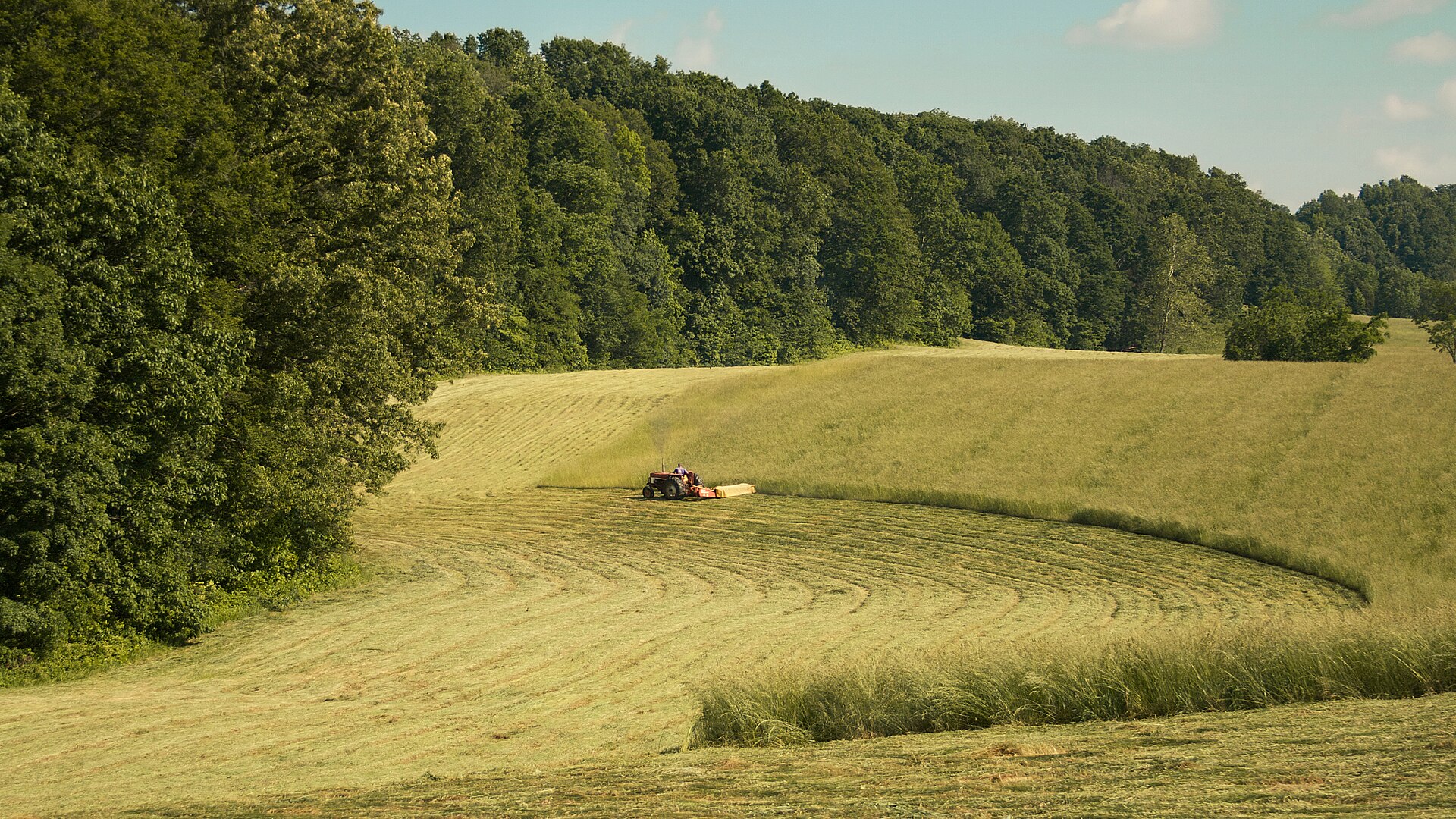
Cut in settled weather, turned until it is ready, never hurried.
Haymaking here waits on the sky. We mow when the forecast looks kind, usually from mid–June into July depending on the year, then leave the crop to wilt in the sun. It is turned to dry evenly and rowed up only when the moisture is right. Bale it too green and it heats in the barn; bale it too hard and the leaf shatters and blows away. If the weather turns, we would sooner stand and wait than rush a poor bale off the field.
Whatever we bale goes straight under cover the same day, off the wet ground and out of the rain. It comes to you the way it left the meadow: clean, dry and well kept.
Leafy, fragrant, the same load after load.
Our meadows are old permanent pasture on light loam over chalk: ryegrass, timothy, cocksfoot and fescue, with native meadow herbs coming through as the field decides. It is gentle enough that a picky pony will settle to it, yet has the body to keep cattle and sheep in good order through winter.
Because every bale is grown, cut and dried on our own land, one lot eats much like the next. We are growers, not dealers. We never buy hay in and we never blend one cut with another. What you load onto the trailer is what came off the field behind the farmhouse.
How it comes off the field
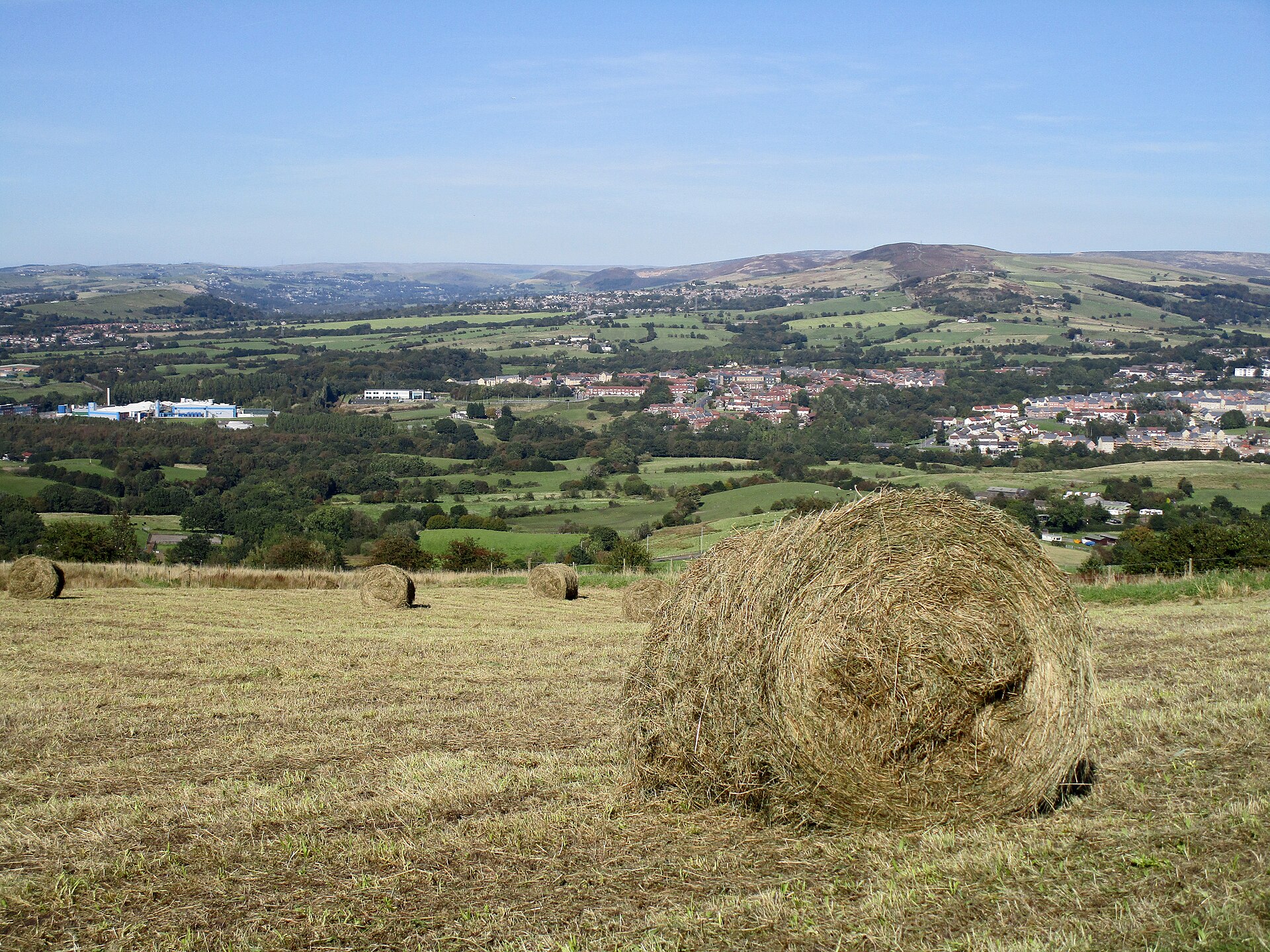
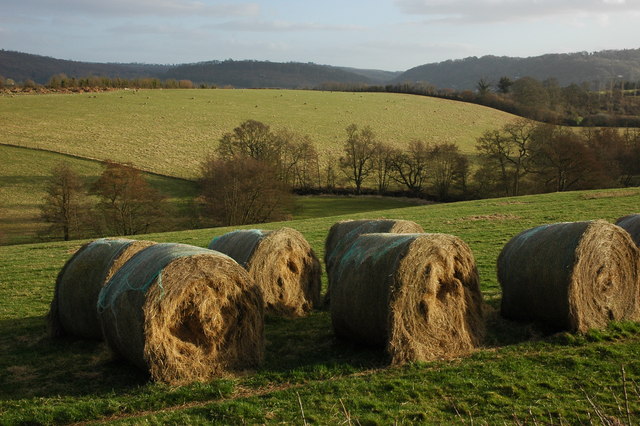
- Big round bales, netwrapped at 4ft × 4ft, well suited to trailer collection or a delivered load.
- Large square bales that stack tight and travel well for busy yards and farms.
- Conventional small bales for handling by hand, set out on our small bales page.
- Kept under cover from the moment it is baled right through to the day you fetch it.
- Made in season, first cut usually from late June, with a later cut when the summer allows.
Other forage off the same meadows.
After a load of meadow hay?
Let us know roughly how much you need and where you are, and we will sort you out.